



Article by Jheng Ren-Hao
The Chefs' Landing: Hakka Kitchen (hereafter referred to as Hakka Kitchen) is the first reality show co-produced by Taiwan and Korea. After two seasons, the program not only won the Golden Bell Award for "Most Popular Variety Show" last year, but also successfully entered Korea's OTT platform TVING and Malaysia's cable TV Astro, and launched co-branded products with 7-11, showing outstanding and symbolic overall market performance.
Lo I-Li, the show's producer and also the Program Department Manager of Hakka TV, points out that international co-production has become an important trend in the film and television content industry in recent years, and Hakka TV's decision to collaborate with a Korean production team was driven by clear and strategic goals. She emphasized the hope of learning from the mature experience of the Korean film and television industry over the past two decades in production techniques, marketing strategies, and artist packaging, to enable Taiwanese programs—especially Hakka content bearing a cultural mission—to break through existing audience limitations and further expand into the international market.
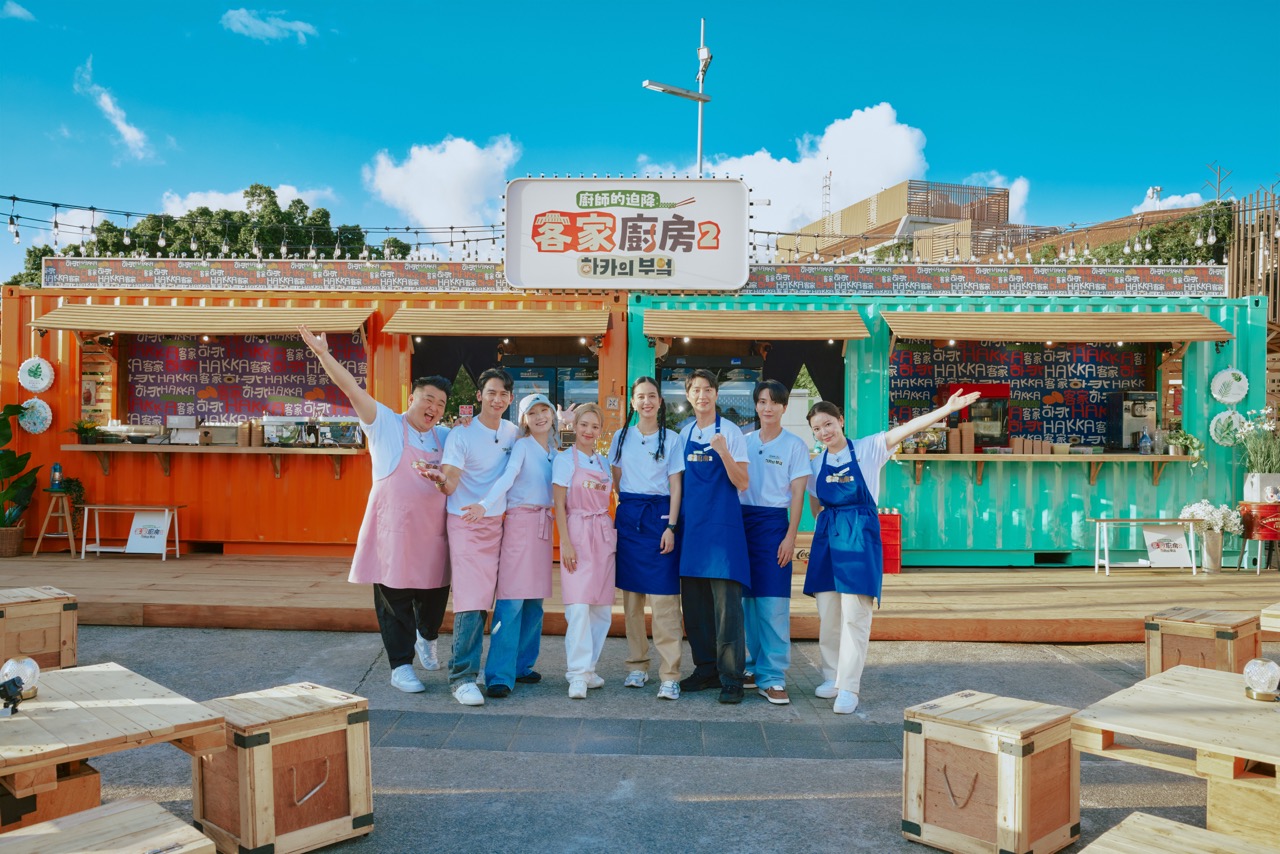
Lo launched this production project with the initial thought, "Why can't we sell Hakka cuisine abroad?" She proactively sought pitching opportunities, and through introductions and matchmaking by Korean industry professionals, ultimately selected the new media production company 3Y CORPORATION (hereafter referred to as 3Y) as the collaborative partner. Established in 2020, 3Y is a relatively young production company that started by producing online video content for YouTube, and subsequently expanded into diverse businesses like artist management and performance planning.
In fact, in recent years, 3Y has not only participated in the production of Hakka Kitchen but has also actively pursued diversified development in the Taiwanese market. For example, it signed the management contract for Lee Da-Hye, the first Korean baseball cheerleader to develop her career in Taiwan, and produced content for her YouTube channel; its representative girl group QWER also performed in Taiwan last year. According to news reports1, 3Y established a branch office in Taiwan in November last year as its first overseas base, demonstrating its high regard for the Taiwanese market and its long-term operational ambitions.
Lo stated that during the evaluation process of collaborating with Korean production companies, she also contacted large television stations like KBS. However, the administrative procedures within the TV station system are relatively complex; in contrast, 3Y demonstrated a higher degree of cooperative flexibility and aggressive ambition. She pointed out that 3Y showed great interest in the theme of "selling Hakka cuisine," not only initiating a visit to Taiwan for talks but also quickly confirming the direction of cooperation in the first meeting, and brainstorming with Hakka TV, bringing a pre-prepared concept proposal, which ultimately gave birth to the program Hakka Kitchen.
She also admitted that within the Korean production industry, 3Y is a smaller and younger team, and in a relatively unfamiliar situation, there were initial concerns. However, Lo believes that the nature of a first collaboration, whether with a domestic or foreign production company, is like "dating"—it inevitably involves testing and adjustment during the process of establishing a new working relationship. Without taking the first step in cooperation, it would be impossible to create new possibilities and sparks.

Strictly speaking, Hakka Kitchen is not the first contact between Taiwan and Korea in the reality show domain. For instance, Taiwan previously produced Ai's Kitchen, an adaptation of Youn's Kitchen authorized by CJ ENM. And in the past, Korean programs have filmed in Taiwan or invited Taiwanese artists to participate. However, Hakka Kitchen is the first program IP jointly developed from scratch by a Taiwanese television station and a Korean production team, covering the entire process of planning, filming, post-production, and promotion, with the IP rights still held by Hakka TV. This model represents a clear difference from the mainstream international export mechanism in Korea, which centers on format licensing.2
Lo believes that precisely because the 3Y team is relatively young and has less organizational baggage, both parties were able to maintain open communication during the co-creation process, thereby improving overall cooperation efficiency and fluidity.
Cultural Adjustment and Clash of Ideas in the Planning Stage
Cultural differences and the adjustment of production habits are the core, unavoidable challenges of international co-production. Both Taiwanese and Korean teams jointly participated in every production phase of Hakka Kitchen. Lo stated frankly that the most significant difference was reflected in the "pace of work." She noted that Taiwanese production teams are typically accustomed to spending more time on fieldwork and planning discussions, but 3Y proposed a highly compressed production schedule, such as completing the planning and starting filming within three months, and airing the show within three months after filming.
Given the production scale of Hakka Kitchen, which involved over 150 cameras, the sheer task of organizing the massive amount of footage was already highly difficult, let alone completing post-production editing in a short period of time, which posed a considerable challenge for the Taiwanese team.
Lo pointed out that the Korean team's high demand for speed stems from its highly competitive industry environment. In the Korean market, programs of the same type might be developed simultaneously. If they cannot be broadcast first, they risk losing market advantage, making it impossible to recoup initial investment costs. Therefore, with the accelerated pace of planning and fieldwork, Hakka TV also needed to enhance decision-making efficiency during editing.
She further emphasized that establishing a clear and specific core concept for the program early in the collaboration would aid the overall planning process. Hakka Kitchen used "selling Hakka cuisine" as its clear main theme, allowing the cross-cultural team to quickly establish consensus and understanding through food, a highly universal cultural carrier.
Regarding content style, Lo believes the program maintained its local Taiwanese cultural characteristics, while the pace primarily came from the introduction of the Korean director and their editing language. She noted that the Korean team provided many ideas during the creative brainstorming phase that broke away from existing frameworks, such as the scene design of a "food truck entering a baseball stadium," which significantly increased the show's tension and entertainment value.

This mindset was also reflected in the casting strategy. Lo pointed out that the Korean team highly values "audience-orientation," incorporating the Target Audience (TA) as the core basis for casting, rather than relying solely on popularity. For example, inviting Leeteuk to attract "ELF" fans and inviting the Korean YouTuber Judy, who is developing her career in Taiwan, to attract her existing social media audience, demonstrated a precise segmentation strategy. This approach shows the characteristic of the Korean production system to internalize marketing considerations early in the program development stage.
Furthermore, the Korean team also emphasized the "role setting" and "chemical effects" among the performers. For example, inviting mukbang YouTuber Heebab in the second season was aimed at strengthening the performance aspect of "food presentation." Pre-setting the team's role structure during the planning stage, such as the parent-type role and the maknae (youngest) position, helped in constructing the subsequent program narrative and interaction rhythm, a contrast to Taiwan's casting logic, which tends to focus more on celebrity popularity and variety show effects.
Lo noted that in the Korean production process, marketing and commercial collaborations are often planned concurrently during the planning stage, such as pre-negotiating co-branded products with channels and then designing the program content accordingly. Leeteuk's "Teuk Burger" launched during the show, and the co-branded products released with convenience stores, are concrete manifestations of this strategy.
Language and On-site Communication: The Biggest Challenge During Filming
In the process of international co-production, language remains a key factor affecting cooperation efficiency. Lo pointed out that even with role settings and interactive designs completed in the preliminary stage, language still affects the natural interaction among performers during actual filming. To preserve the sense of genuine interaction, no real-time translation equipment was used during filming. Instead, communication was facilitated through performers with Chinese and Korean language abilities (such as Judy and Heebab) acting as bridges, supplemented by English and body language.
However, due to the overall limited English communication ability, the performers experienced a considerable level of psychological pressure on set to maintain their performance state.
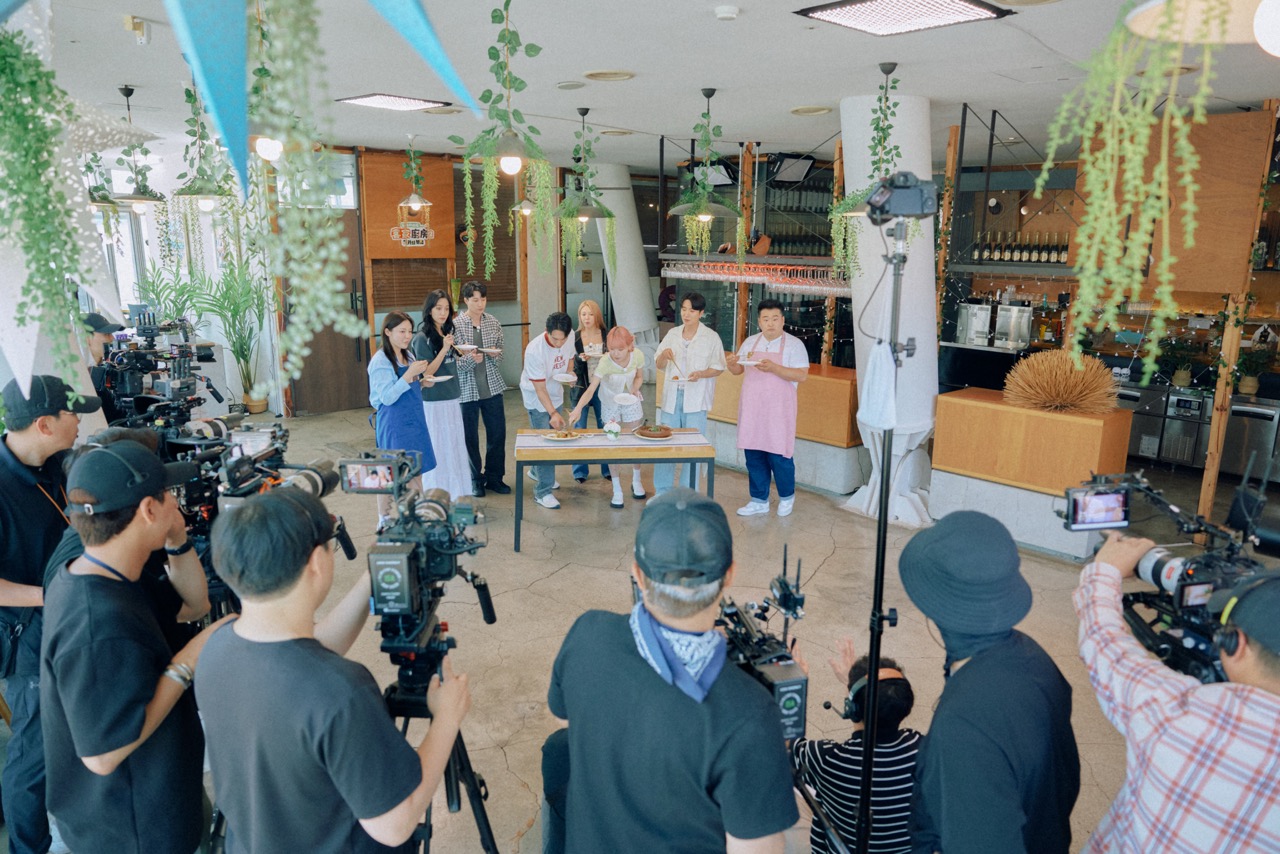
The internal production team also faced language challenges. Lo stated that the proportion of Taiwanese and Korean staff was roughly half and half to achieve the goal of technical exchange. In terms of professional division of labor, the Taiwanese side led crucial aspects of visual presentation and execution, such as art, production, and lighting, while the Korean side focused on technical cores like directing and sound recording, with cinematography being a joint collaboration between technicians from both sides. Both sides relied on translators for communication, which increased the cost of information transfer and the risk of error.
Under the conditions of reality show filming, the director could not frequently call "cut," which further magnified the communication gap issue. This problem became even more pronounced as the production scale expanded in the second season. Lo believes that in addition to increasing the number of translators, the more critical factor is establishing more precise filming plans and communication mechanisms early on to reduce on-site uncertainty. Nevertheless, she noted that although language increased the cost of information transfer between the staff of the two countries, it also sparked new cross-cultural narrative sparks.
Furthermore, differences in work culture were also notable. She pointed out that Taiwanese crews typically have fixed mealtimes and provide meals, while Korean teams tend to arrange their own mealtimes to quickly meet their needs. Lo shared that during filming in Korea, she was often impressed by hearing the director remind staff through the microphone to find a break and eat, which left a deep impression on her. However, after filming concluded, the Korean team often had group dinners as a form of reward, demonstrating a different team bonding method compared to Taiwan.
Industry Significance and Future Potential of International Co-production
As the first Taiwan-Korea co-produced reality show, Hakka Kitchen not only achieved breakthroughs in content but also showed results in market expansion. The second season was successfully launched on TVING, Korea's largest domestic OTT platform, becoming one of the few Taiwanese variety programs to enter the Korean market. 3Y's command of Korean distribution rights was a key factor in the program's ability to enter the market.
According to the 2025 Report on Outsourcing Transactions of TV Programs released by KOCCA (Korea Creative Content Agency) in March of this year (2026)3 Korean production companies often only serve as executive producers in the domestic market, with program copyrights and profits primarily held by the television stations. Therefore, through international co-production, production companies have the opportunity to acquire the rights to program distribution and profit sharing, creating a direct incentive.
<span class="g-head">Survey on the Ownership of Program Copyrights and Distribution Rights Between South Korean Broadcasting Stations and Production Companies</span>
<span class="caption">Note: This chart shows the results of a KOCCA survey involving 8 South Korean broadcasting stations and 94 production companies (including details of rights agreements in contracts).</span>
<span class="caption">Source: KOCCA "2025 방송 프로그램 외주제작 거래 실태 보고서", compiled and translated by this article</span>
On the other hand, while the number of independent production companies in Korea continues to grow, industry resources are concentrated in large enterprises, leading to growth pressure on small and medium-sized production companies4, which further drives them to explore cooperation opportunities in overseas markets.
Within this structure, the Taiwan-Korea co-production model creates a perfect complement: Taiwan's cultural content and local stories, combined with Korea's mature production system and international distribution experience. This type of cooperation not only created a successful case for Hakka Kitchen but also provided a replicable and potentially developmental path for the future of Taiwan's content industry.
Lo admitted that as Hakka Kitchen approaches its third season, many details still need continuous adjustment, and challenges remain. At the same time, international co-production indeed holds innovative possibilities and industry value.
<div class="footnotes"><ul>
<li class="footnote" id="fn-e18-1">
<p>"QWER" 3Y CORPORATION Establishes a Taiwan Branch Office</p></li>
<li class="footnote" id="fn-e18-2">
<p>Format licensing refers to the authorization of a program's specific structure, including its basic elements such as workflow, rules, gameplay, and style, ensuring that the program can be replicated and adapted by different production teams using the same model.</p></li>
<li class="footnote" id="fn-e18-3">
<p>2025 방송 프로그램 외주제작 거래 실태 보고서</p></li>
<li class="footnote" id="fn-e18-4">
<p>2025 방송영상산업백서</p></li>
</ul></div>


